Graph-walk experiment
An experiment on whether a knowledge graph can change an agent's next decision. Budget, stopping rule and failure modes are written down.

I am an enterprise architect in Wiesbaden. I build experiments and write about what has to be settled before an AI agent may act in a company where rules and audits apply.
An agent can find its own way to a result. Who approves, what is recorded and how an action is undone stays with the organisation. The six points below are what I have worked out about this so far. On this site I speak for myself and not for my employer.
Each point links to the essay behind it. The overall idea is described in Governed Intelligence.
A review starts with one outcome the agent can bring about and what follows from it, and then asks who can authorise each change.
An agent may choose how to reach a result. Who may approve a purchase, and which service may place it, is still decided by the company.
When to use a workflow and when to let an agent choose the route
A model can interpret a document or propose a next step. The surrounding system decides when review is needed and enforces whether an action may proceed.
If a booking succeeds and the reply is lost, the agent sees a timeout. The system has to keep the outcome as unknown until it can check with the service that executed it.
Time, tool calls, cost and repeated attempts are limits that code enforces. A model's confidence does not establish that a task is complete.
An agent gets what a new colleague gets: a role, scoped access, curated context, an escalation path and a probation period.
An experiment on whether a knowledge graph can change an agent's next decision. Budget, stopping rule and failure modes are written down.
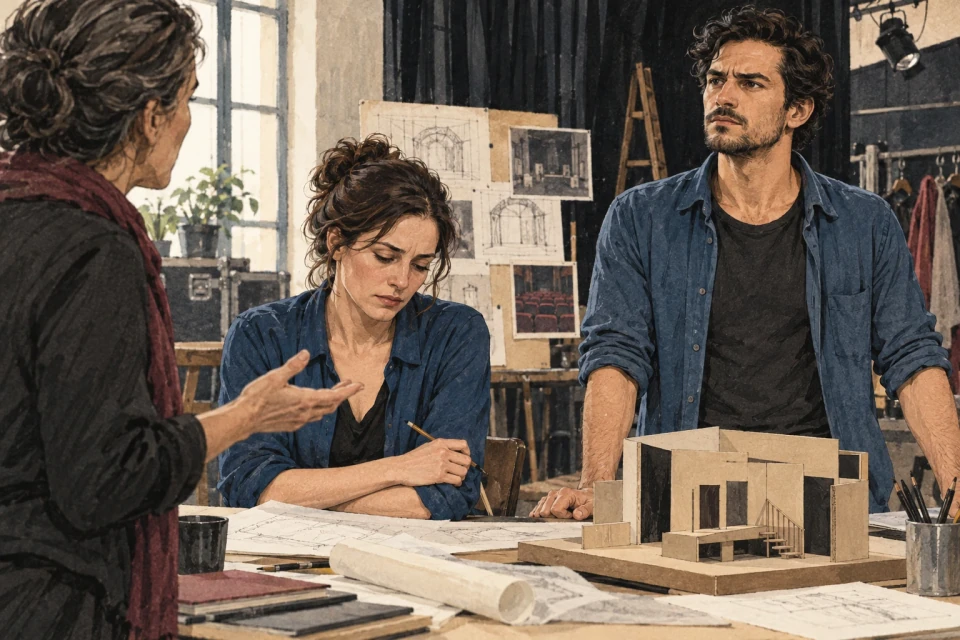
Two characters receive the same words and react differently. A local model runs in the browser; state and decisions can be inspected.
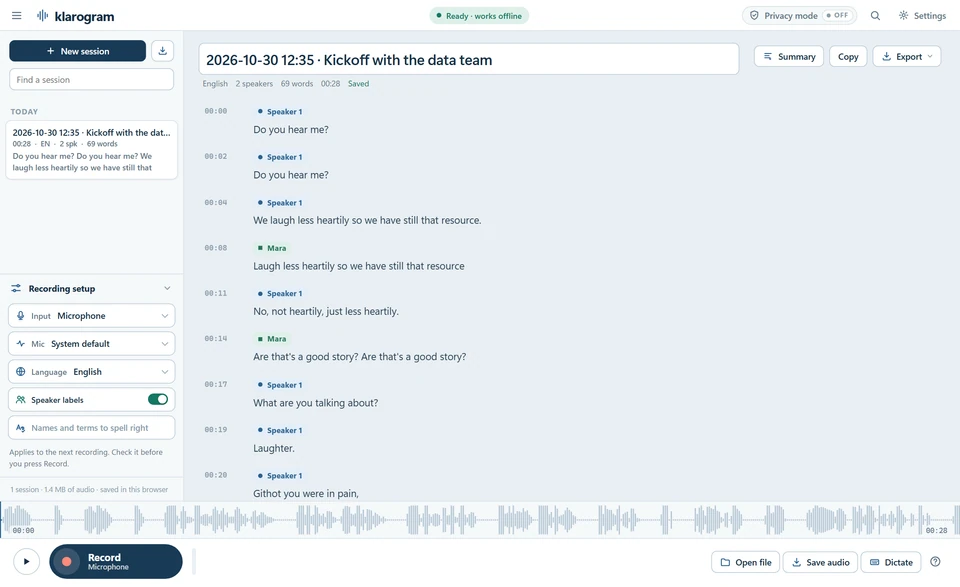
A transcription app that runs offline in the browser. The recording does not leave the device.
Workshops: a remote workshop for about 200 people in R&D on producing reviewable HTML reports from Excel data with an in-house AI portal, followed by a second one on company design and printable PDF output. Participants later applied the method to their own tasks.
I work as Principal Systems / IT-Architect Engineer at R+V Versicherung AG, in the Center of Excellence Enterprise Architecture. Before that I worked in IT compliance and architecture governance, and led a team of around 17 people on connected rehabilitation products at LIME Medical.
My background is research in biometrics and computer vision at Fraunhofer IGD, followed by software and product architecture.
If you are wondering what AI is going to change in your team's work, and where to start, I would be glad to talk. A first conversation is an exchange about one concrete question. It is free and commits neither side.
You can also book a time directly. The calendar is loaded from Google only after you allow Google Calendar in privacy settings.